From blooming spring flowers to reclaimed wood fencing, landscaping isn’t just about making a yard look pretty. It can also increase home value and provide environmental and health benefits.
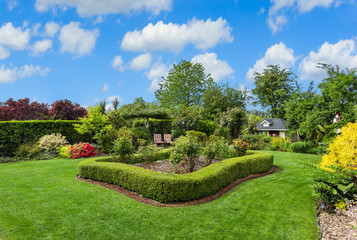
Landscapers install and maintain trees, shrubs, flowers, turfgrass and hardscape features. They also build pathways, patios, decks, retaining walls and fences.
Color
Color is one of the most important aspects of landscape design. It evokes emotions and creates focal points that make your yard stand out. Color is also a key ingredient in the creation of a harmonious environment. Understanding the principles of color and how to apply them in your landscaping can make the difference between a yard that looks haphazard and unplanned, or a garden that is well-thought out with purpose and intention.
To begin, familiarize yourself with the color wheel. It displays the primary colors and their relationships to each other, allowing you to understand how to create complementary and analogous combinations. Colors that lie directly across from each other on the wheel are considered complementary and tend to intensify each other. Examples of these pairings include red and yellow, purple and yellow, and blue and orange.
You can also use tertiary colors, which are found between the complementary pairs and provide contrast. These are easy to find in annuals and perennials that come in a variety of hues. Finally, don’t forget about the neutrals, which can be used to ground your design or to provide a backdrop for other colors to shine. Using tints and shades of the same color can add interest to your landscape, from light pinks and lavenders to dark maroons and plums.
Form
Form refers to the overall three-dimensional shape of an element, such as a flower bed, tree, or piece of hardscape. This element contributes to the attractiveness of a landscape and helps to define movement through outdoor spaces. The form also adds visual weight and creates contrast between elements. For example, rounded, natural forms can soften the sharp angles of hardscape materials or an outdoor structure and more defined, linear shapes can add order and definition to a landscape.
While color tends to be the most recognized aspect of landscaping, shape, and form are equally important. The form of a plant or hardscape element refers to its enduring characteristics that extend beyond a single growing season. Whether the shape of a tree is round or upright, the style in which a plant is pruned, or how plants are clustered together all contribute to a landscape’s form.
Like lines, shape is crucial in the landscape because it defines movement and directs the eye. Form can be created through different structures in a garden, such as the edges of walkways or the perimeter of a pool deck. Alternatively, it can be found in the shapes of trees, flowers, or how grass grows. Using different shapes can help to establish distinct areas within a yard and bring in a variety of colors.
Texture
Adding texture to your garden is one of the most important elements of landscape design. It creates contrast, adds visual interest, and fashions backdrops that allow plants to shine. Texture can also help establish an emotional tone and shape how your backyard feels.
A shady garden of fine textures like delicate ferns and soft mosses offers a calm, refined atmosphere while coarse textured plants such as spiky palms or rugged boulders evoke dramatic drama. In addition to plant-based textures, landscapes can incorporate textures in the form of hardscape materials such as stone, wood, gravel and concrete.
To achieve the most appealing and engaging texture in your garden, repetition and contrast are key. Repetition helps establish unity while contrasting forms and shapes prevent monotony. However, too much of any texture can overwhelm a space and become visually unsettling.
To ensure a satisfying balance, select the right textures for your garden to complement your home’s architectural style and maintenance preferences. For example, a coarse-textured mulch may not work well with a smooth brick house while a fine-textured mulch could clash with the bark of a mature tree. Also, consider how the different textures will interact with each other as they change with the seasons and weather conditions.
Lines
Lines are one of the most basic, yet vital landscape design elements. They elicit emotional responses, create structure, and shape movement within a landscape. They may be horizontal, vertical, diagonal or curved, thick or thin. They are found throughout the landscape: where paving meets turf, paths, or sidewalks; the edge of a hardscape element like a rock wall or fence; the outline of a planting bed or the border of a garden bed; and the contour of slopes.
Lines evoke a variety of emotions in people, depending on their shape and orientation. For example, straight lines are formal and direct; whereas curved lines feel more natural and graceful. When designing beds, pathways or other hardscape features it is important to consider the type of line that will best convey your desired aesthetic.
In addition to straight lines, zigzag lines can add excitement and energy to a landscape design by drawing the eye in multiple directions and establishing a sense of movement. They are often used in pathway designs, garden borders, and hedges to break up the monotony of straight lines.
Horizontal lines are a useful tool to help define a landscape and expand smaller spaces. They can be created by incorporating tall plants or structures, such as trees or arbors; or by adding low, ground-level defining features like garden walls or hedges.