Observe your home for signs of foundation problems. Even small issues like sticking doors or uneven floors could be red flags that the foundation is sinking or moving.
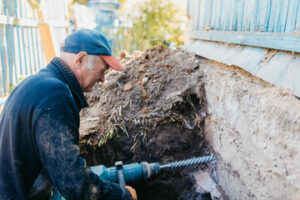
If left unchecked, these problems can escalate into structural damage. Detecting problems early and calling in contractors for repairs will prevent them from getting worse. Contact Foundation Repair Greensboro NC for professional help.
A few factors influence how much you’ll pay to fix your foundation. The type and severity of damage, the repair method, and the cost of materials are all significant variables.
The location of your home also impacts repair costs. Areas that experience more frequent flooding and earthquakes require additional reinforcements in foundation structures, which can increase the overall cost of repairs. The cost of local labor rates and living expenses can also affect final prices.
Generally speaking, the more severe the damage, the higher the repair cost. Taking a proactive approach to maintenance is an effective way to lower your overall repair costs and protect your investment. For example, homeowners can mitigate soil movement by installing soil stabilization systems, which reduces shifting and cracking in the foundation. Additionally, by addressing drainage issues like gutters and downspouts, you can prevent water from pooling around the foundation, which can lead to cracking and settlement.
Minor repairs can include filling small cracks with epoxy, which costs between $250 and $800. These repairs are simple, cost-effective, and can help prevent cracks from escalating into more serious problems.
Moderate repairs include underpinning and stabilizing the foundation with piers. This method costs between $1,000 and $3,000 per pier, and can be very costly for larger homes with extensive damage. However, it’s a long-term solution that prevents sinking and settling.
Major repairs involve raising and replacing sections of the foundation. This can be very expensive and is often necessary for more severe structural damage.
Another factor that influences repair costs is how easily workers can access the damaged area of your foundation. If your foundation is in a hard-to-reach location, such as under a deck or tight crawl space, you’ll likely be charged more for the work since it takes more time and effort to perform.
Additionally, some repairs may require permitting and inspections, which can add to the total cost of the project. You’ll also want to take into account any associated costs, such as travel fees or cleanup charges.
Repair Options
There are many different methods that can be used to fix foundation problems. Some are better suited for certain situations than others, but all offer long-term stability and protection. It is important to weigh all of your options carefully, focusing on how serious the issue is and what the underlying cause might be. If the foundation is weakened by poor soil conditions, for example, it may be necessary to remove and replace the soil to provide stronger support. This is a more involved and expensive option than simply stabilizing the current foundation with piers or wall anchors.
Some low-cost solutions like concrete patching or sealants are available to address cracks in the foundation walls. These can help to prevent water and other debris from entering the home, but they do not address the underlying problem that caused the cracks.
Concrete pads were an early repair method that was inexpensive to implement, but they can become displaced or unanchored due to shifts in the soil under and around the home. They also don’t offer support to the deeper, more stable soil.
For homes experiencing structural issues such as sinking or sloping, foundation piers are an effective solution. They are drilled into the ground until bedrock or stable soil is reached, then they are attached to the foundation’s footing. This redistributes the weight of the structure, allowing it to stabilize.
Other repair methods include steel and concrete pilings, which are pressed into the ground to form a solid foundation base. Helical piers are screw-shaped supports that can be driven into the ground to anchor foundations, and they are an especially good choice for homes built on shifting soils because they can be easily adjusted as moisture changes. These are some of the most reliable, cost-effective options for addressing structural problems.
Preparation
All homes experience some settling over the years, but uneven or excessive movement can compromise the integrity of your home’s foundation. The first signs of foundation problems can be minor cracks in walls or doors and windows that don’t close properly. Over time, these can lead to bowed and cracked walls, uneven or sloping floors, and other issues that require expensive structural repairs.
Regular inspections of your home’s foundation can help you spot potential problems and call in a contractor right away. Look for hairline cracks that form a zigzag pattern or a noticeable warping in the walls. If you notice that furniture is pulling away from the walls, this could be a sign of shifting soil that needs to be corrected by a foundation expert.
While you’re preparing for your foundation repair, it’s a good idea to clear out any debris or obstacles that may hinder access for the construction crew. This includes removing large items from around the foundation. Also, make sure that the yard is free of obstructions so that water can drain away from the foundation and avoid accumulating around it.
Homeowners should also keep in mind that the repair process will disrupt their daily routine, so it may be necessary to move any furniture and belongings out of the way to prevent damage. Some homeowners even choose to temporarily stay elsewhere while the work is underway to minimize disruptions.
Once the construction crew has a clear picture of the work to be done, they can recommend an appropriate method for your home’s condition. If the problem is severe, piers can be used to lift your house back into place. These piers are drilled underneath the foundation and then filled with liquid concrete to stabilize your foundation. They can be installed either by driving them into stable soil or by using hydraulic jacks to lift the house and stabilize it.
Mudjacking is another popular method of raising sunken areas in a concrete slab. This method uses a pump to inject a cement slurry under the slab to raise it. This method is faster than other methods and can usually be completed in just a few days.
Repair Process
The first step of the repair process is a thorough inspection by a structural contractor specializing in foundation damage. The contractor will examine the structure, including beams and walls, as well as the drainage system. He will also look at the soil conditions to see if shifting or improper moisture are contributing factors.
The next step is preparing the area for the repair work. This involves clearing debris and removing any obstacles that could block access to the areas needing attention. It is important to make sure that contractors and equipment can move freely in and out of the area, so they can complete their repairs without delay. It is also a good idea to inspect and clean gutters, downspouts, and landscaping to ensure that water flows away from the home and doesn’t contribute to future problems.
After the assessment, the foundation repair professional will create a detailed diagram of the house’s elevation. This will include a map of any cracking and shifting as well as details about when the cracks appeared and how long they have been present. This information will help the contractor determine the cause of the problem and create a plan to address it.
If the damage to the foundation is severe, the contractor will need to install pilings or piers. These will support the foundation and prevent it from sinking further. The contractor will dig tunnels at regular intervals under the house and use hydraulic jacks to drive steel or concrete pilings into the ground. The contractor will then stack the piling sections on top of each other and secure them with metal shims. Once the piles are in place, they will be backfilled with soil.
After the repair work is complete, the contractor will use the excavated soil to fill in the holes and tunnels created for the piers. This soil will be piled a little higher than the surrounding soil, which allows it to slowly sink into the piers and eventually become fully compressed. Once the excess soil has been used up, the contractor will backfill the remaining spaces and cover the piers with dirt.